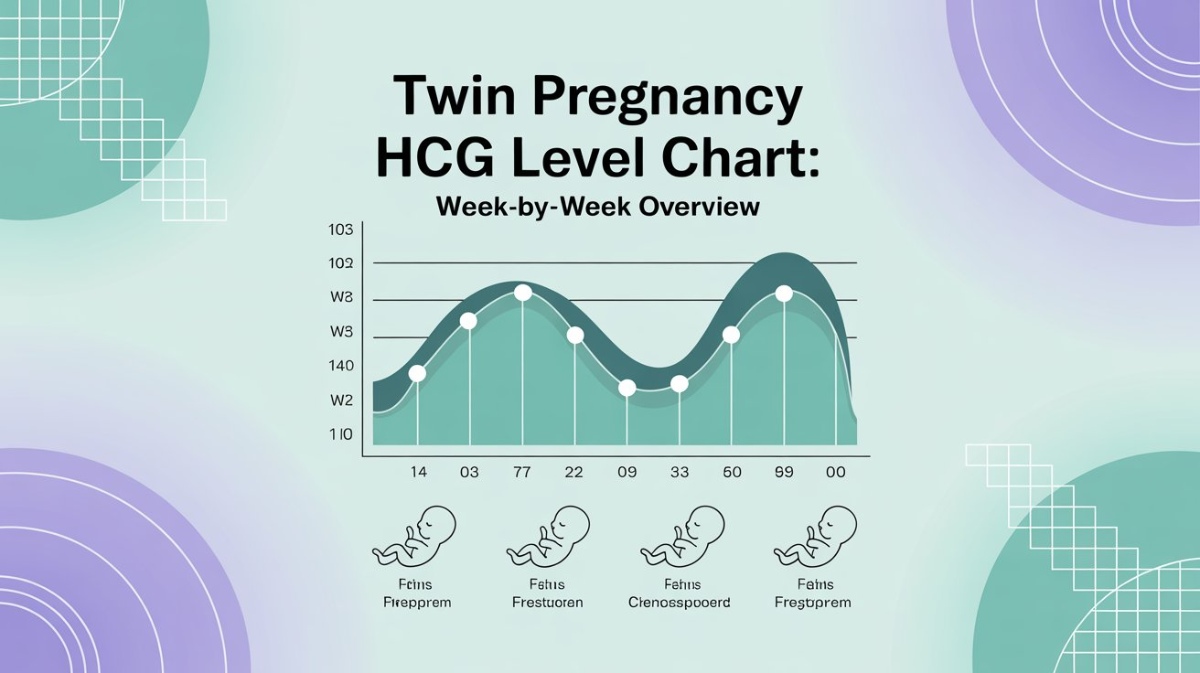
In twin pregnancies, hCG (human chorionic gonadotropin) levels are typically higher than in singleton pregnancies, often 30-50% higher during the first trimester, according to pregnancy resources. This increased level is due to two placentas producing the hormone. However, it’s important to note that hCG levels vary significantly between individuals and even within twin pregnancies, making it challenging to diagnose hCG Levels in Twin Pregnancy alone.
When a woman discovers she’s pregnant, one of the first steps in early prenatal care is measuring the hCG level—a hormone crucial to pregnancy. But what many expectant mothers don’t realize is that hCG (human chorionic gonadotropin) levels may tell more than just whether you’re pregnant. Sometimes, these levels may hint at something more exciting—a twin pregnancy! Let’s break down what hCG is, how it behaves differently in hCG Levels in Twin Pregnancy, and what you should know about interpreting these hormone levels.
What is hCG?
Human chorionic gonadotropin (hCG) is a hormone that the developing placenta produces after fertilization. Its preliminary function is to support the corpus luteum, which produces progesterone, a hormone that helps maintain the uterine lining and a healthy pregnancy in its early stages.
Doctors use quantitative hCG blood tests to:
- Confirm pregnancy
- Estimate how far along the pregnancy is
- Monitor early pregnancy development
- Help detect potential complications
- Suggest the possibility of multiple gestations, like twins
How Do hCG Levels Change in a Twin Pregnancy?
In a twin pregnancy, hCG Levels in Twin Pregnancy, you can typically expect higher-than-normal hCG levels. That’s because two embryos mean two placentas (or one shared, in the case of identical twins), both producing hCG. As a result, the hormone may rise more rapidly and reach higher peak values than in a singleton pregnancy.
Here’s a simplified look at hCG levels in singleton vs. twin pregnancies:
| Gestational Age | Singleton hCG Range | Twin hCG Range (Approx.) |
|---|---|---|
| 3 weeks | 5 – 50 mIU/mL | 30 – 100 mIU/mL |
| 4 weeks | 5 – 426 mIU/mL | 200 – 800 mIU/mL |
| 5 weeks | 18 – 7,340 mIU/mL | 1,000 – 10,000+ mIU/mL |
| 6 weeks | 1,080 – 56,500 mIU/mL | 7,500 – 100,000+ mIU/mL |
| 7–8 weeks | 7,650 – 229,000 mIU/mL | 30,000 – 300,000+ mIU/mL |
Note: hCG Levels in Twin Pregnancy can vary widely among individuals. These ranges are general guidelines and should not be used for self-diagnosis. Always consult your OB-GYN for interpretation.
How is hCG measured?
There are two primary ways to measure hCG:
- A qualitative hCG test determines whether the hormone is present in the body, providing a positive or negative result.
- Quantitative hCG test – Measures the exact concentration in the blood (in mIU/mL).
In early pregnancy, doctors often perform two or more quantitative tests spaced 48 to 72 hours apart to observe the rate of increase in hCG levels. A healthy singleton pregnancy typically shows hCG levels doubling every 48–72 hours. The increase might be even more rapid in twin pregnancies, but not always.
High hCG Levels: Twins or Something Else?
High hCG levels might make you wonder if you’re expecting more than one baby. However, elevated levels are not exclusive to twins. Other causes include:
- Miscalculated conception date
- Molar pregnancy (abnormal placental growth)
- Down syndrome or chromosomal abnormalities
- Natural variation in hormone production
Ultimately, only an ultrasound—typically performed between 6 and 8 weeks—can confirm a twin pregnancy. At that point, your doctor can detect:
- Two gestational sacs
- Two yolk sacs
- Two heartbeats (in the case of viable twins)
So while hCG may suggest twins, it cannot confirm them.
Early Signs You Might Be Carrying Twins
Aside from higher hCG levels, there are a few early symptoms that may point to a twin pregnancy. These include:
- More intense morning sickness: Elevated hormone levels can trigger nausea earlier and more severely.
- Faster weight gain: Gaining weight more quickly than expected, especially in the first trimester.
- Extreme fatigue: Your body is working extra hard to support two babies.
- Uterus measuring larger than gestational age
- Early fetal movements or a fuller uterus during physical exams
While these can hint at twins, they’re not conclusive without imaging.
Case Study: Twin Pregnancy hCG Tracking
Let’s consider an example. A woman is 5 weeks pregnant and her hCG level is 9,500 mIU/mL. This falls in the higher range of normal, but is it high enough to suggest twins?
- A follow-up test 48 hours later shows her hCG at 18,000 mIU/mL—a near doubling.
- At her 7-week ultrasound, two heartbeats were detected.
While hCG levels gave a clue, the ultrasound provided confirmation.
Conclusion:
If you’ve recently received a high hCG reading, it’s natural to wonder if you might be expecting twins. While hCG Levels in Twin Pregnancy tend to be higher, they’re not a sure sign. Many factors can influence your hormone levels; the only way to know is through a first-trimester ultrasound. Until then, enjoy the excitement of early pregnancy—and trust your care team to monitor your journey toward a healthy birth, whether it’s one baby or two.
Frequently Asked Questions (FAQs)
Can I know if I’ll have twins before my first ultrasound?
Possibly. Higher-than-normal hCG levels may hint at twins, especially when paired with intense early pregnancy symptoms. However, ultrasound remains the gold standard for confirmation.
Are hCG levels consistently high in twin pregnancies?
Not always. Some twin pregnancies show hCG levels within the typical singleton range. That’s why trends over time matter more than a single reading.
How early can hCG levels indicate twins?
Some women with twins show elevated levels as early as 4–5 weeks. However, your doctor should always interpret this information alongside other findings.