Pregnancy is often filled with anticipation and hope, but sometimes it brings unexpected complications. One of the rarest and most dangerous complications is a cornual ectopic pregnancy. Unlike typical ectopic pregnancies that occur in the fallopian tubes, cornual ectopic pregnancies implant in a unique and risky location—the cornua of the uterus, near the area where the fallopian tube enters the uterine cavity.
Though uncommon, this type of pregnancy can lead to life-threatening internal bleeding if not diagnosed early. Let’s explore what a cornual ectopic pregnancy is, its symptoms, how it differs from other ectopic types, and what treatment options are available.
What Is a Cornual Ectopic Pregnancy?
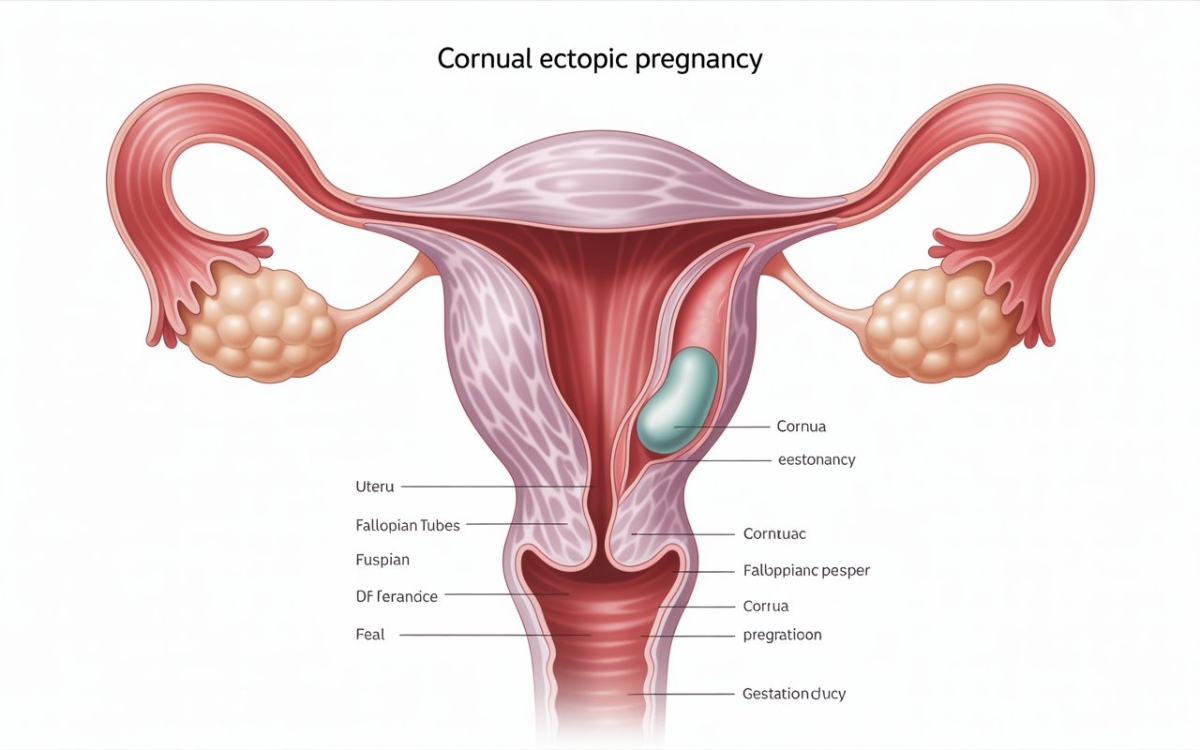
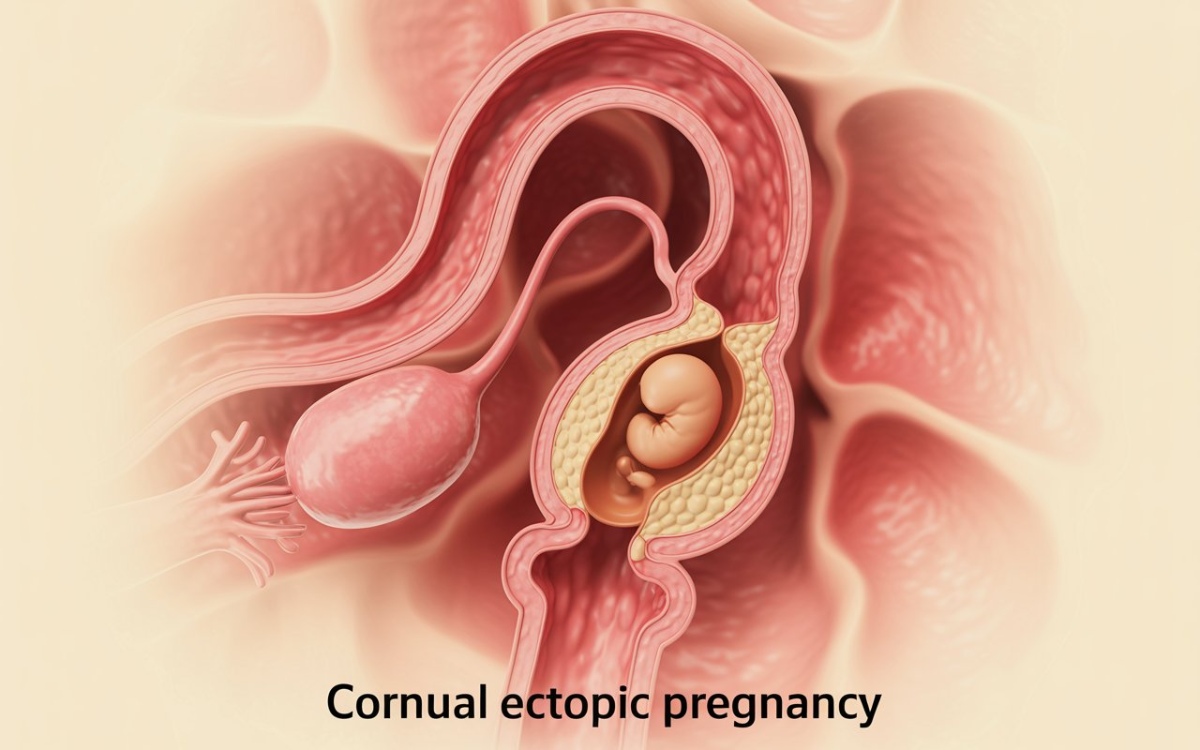 A cornual ectopic pregnancy occurs when a fertilized egg implants in the interstitial (cornual) part of the fallopian tube, which lies within the muscular wall of the uterus. This location allows the pregnancy to grow longer than other ectopic pregnancies before rupturing, making it particularly dangerous.
Medical Definition:
- Cornua = Upper lateral region of the uterus where the fallopian tubes enter
- Ectopic = A pregnancy that occurs outside the central uterine cavity
This condition is also referred to as an interstitial pregnancy. It accounts for only 2–4% of all ectopic pregnancies, but up to 20% of deaths from ectopic pregnancy are due to delayed diagnosis.
Causes and Risk Factors
While any woman can develop a cornual ectopic pregnancy, certain factors can increase the risk:
Risk Factors:
- History of pelvic inflammatory disease (PID)
- Previous tubal surgery or ectopic pregnancy
- IVF and assisted reproduction
- Congenital uterine abnormalities
- Endometriosis
- Scar tissue or adhesions in the uterus
Did You Know?
Women who have had tubal ligation reversal or in vitro fertilization (IVF) are more likely to experience this rare ectopic type.
Symptoms of Cornual Ectopic Pregnancy
In the early stages, symptoms may resemble a normal pregnancy or a typical tubal ectopic pregnancy. However, symptoms often appear later (around 7–12 weeks) and can escalate quickly.
Common Symptoms Include:
- Mild pelvic or abdominal pain (often one-sided)
- Vaginal spotting or bleeding
- Shoulder tip pain (if internal bleeding irritates the diaphragm)
- Dizziness or fainting
- Positive pregnancy test with no visible intrauterine pregnancy on ultrasound
If ruptured:
- Sudden, severe abdominal pain
- Rapid heartbeat
- Low blood pressure (shock)
- Unconsciousness (in extreme cases)
Diagnosis: How It’s Detected
Early detection is crucial. Due to its deep location in the uterine wall, a cornual ectopic pregnancy can be easily missed in early ultrasounds. Diagnosis often requires:
Diagnostic Tools:
- Transvaginal ultrasound (TVUS) – to locate the gestational sac
- β-hCG blood tests – tracking rising pregnancy hormone levels
- MRI or 3D ultrasound – in ambiguous cases
- Laparoscopy – may be used if internal bleeding is suspected
Sonographic Signs (Cornual Pregnancy Triad):
- Empty uterine cavity
- Gestational sac located outside the endometrium
- A thin layer of myometrium around the sac
Why Cornual Pregnancies Are More Dangerous
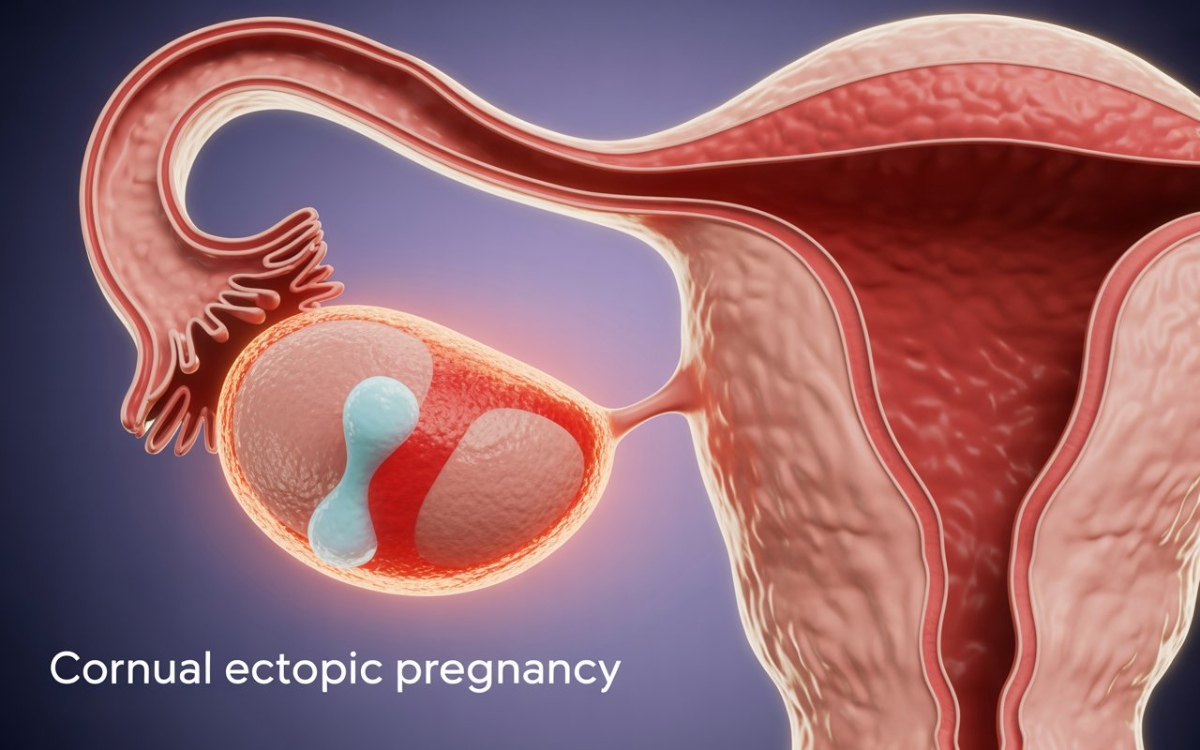 Because the cornual area is highly vascularized, a rupture can result in massive hemorrhage, posing a serious threat to the mother’s life. Unlike tubal ectopics that rupture earlier, cornual pregnancies may grow larger unnoticed, increasing the risk of catastrophic bleeding.
Comparison Table: Types of Ectopic Pregnancies
| Type of Ectopic Pregnancy | Implantation Location | Prevalence | Rupture Risk Timeline | Common Symptoms | Treatment Approach |
|---|---|---|---|---|---|
| Cornual (Interstitial) | In the muscular wall of the uterus | Rare (2–4% of ectopics) | Late (8–12 weeks) | One-sided pain, heavy bleeding, dizziness | Surgery or methotrexate (if detected early) |
| Tubal | Fallopian tube (ampulla or isthmus) | Most common (90%+) | Early (6–8 weeks) | Sharp pelvic pain, spotting, low BP | Methotrexate or laparoscopic surgery |
| Cervical | In the cervix | Very rare | Varies | Heavy vaginal bleeding, cramping | Methotrexate, dilation & curettage |
| Ovarian | On the ovary | Extremely rare | Early | Severe pelvic pain, fainting | Surgery |
| Abdominal | In the abdominal cavity | Extremely rare | Late | Vague pain, internal bleeding | Surgery |
How Cornual Ectopic Pregnancy Is Diagnosed
Early detection is key to avoiding severe complications. Due to its location, this type of ectopic pregnancy may not show up clearly in early ultrasounds.
Diagnostic Methods:
- Transvaginal ultrasound (TVUS): Preferred first step to identify the location of the pregnancy
- Serum beta-hCG levels: Monitored to ensure standard rise patterns
- MRI or 3D ultrasound: Used if the diagnosis is uncertain
- Laparoscopy: Sometimes used when internal bleeding is suspected
Typical Ultrasound Findings:
- Empty uterine cavity
- Gestational sac in the upper lateral uterine corner
- A thin layer of myometrium surrounds the sac
Treatment Options for Cornual Ectopic Pregnancy
Treatment relies on the size of the pregnancy, hCG levels, and whether or not rupture has occurred.
1. Medical Management
If detected early and unruptured, methotrexate (a chemotherapy drug) may be used to stop cell growth and dissolve the pregnancy.
Criteria for methotrexate:
- Stable vital signs
- No rupture
- β-hCG levels under 5,000 mIU/mL
- Gestational sac <3.5 cm with no fetal heartbeat
2. Surgical Management
In many cases, surgery is required, especially if rupture is suspected.
Types of Surgery:
- Cornual resection: Removal of the pregnancy and surrounding uterine tissue.
- Laparoscopy: Minimally invasive option.
- Laparotomy: Open surgery for emergency cases.
- Hysterectomy: Rare, but may be needed if bleeding is uncontrollable.
Post-Treatment and Recovery
After treatment, close follow-up is needed:
- β-hCG monitoring until it returns to zero
- Rest and observation for complications
- Emotional and psychological support
Emotional Healing:
The experience of an ectopic pregnancy especially a rare and traumatic one—can be emotionally devastating. It’s essential to seek support, whether through therapy, support groups, or compassionate medical care.
Can You Get Pregnant After a Cornual Ectopic?
Yes, future pregnancies are possible, but the risk remains. Many women go on to have healthy pregnancies afterward, though:
- Early ultrasound is critical to confirm correct implantation
- There may be an increased chance of uterine rupture in later pregnancies
- Some may require cesarean delivery
Conclusion:
A cornual ectopic pregnancy is rare but extremely serious. Its location makes early detection difficult, and its potential for massive hemorrhage makes it a medical emergency. If you’re experiencing symptoms like one-sided pain, unusual bleeding, or a positive pregnancy test with no intrauterine sac, don’t wait—seek immediate care.
Frequently asked Questions (FAQs)
How rare is cornual ectopic pregnancy?
Cornual ectopic pregnancies occur in about 2–4% of all ectopic pregnancies.
Is it the same as a tubal pregnancy?
No. A cornual pregnancy occurs in the part of the fallopian tube that lies within the uterine wall, not in the ampullary or isthmic portion like a tubal ectopic.
Can cornual ectopic pregnancy be detected early?
Yes, but it isn’t easy. Diagnosis often requires high-resolution transvaginal ultrasound and careful monitoring of β-hCG levels.
What is the survival rate?
With early detection and therapy, survival rates are high. Delays in diagnosis, however, can lead to life-threatening complications.
How soon can I try for another pregnancy?
Doctors often recommend waiting at least 6–12 months, depending on the treatment and healing process.
Explore More on Pregnancy & Women’s Health
Want to learn more about pregnancy complications and women’s health? Visit VityCare Complete Pregnancy Guide for in-depth articles, expert tips, and real-life experiences to help you stay informed and supported throughout your journey.