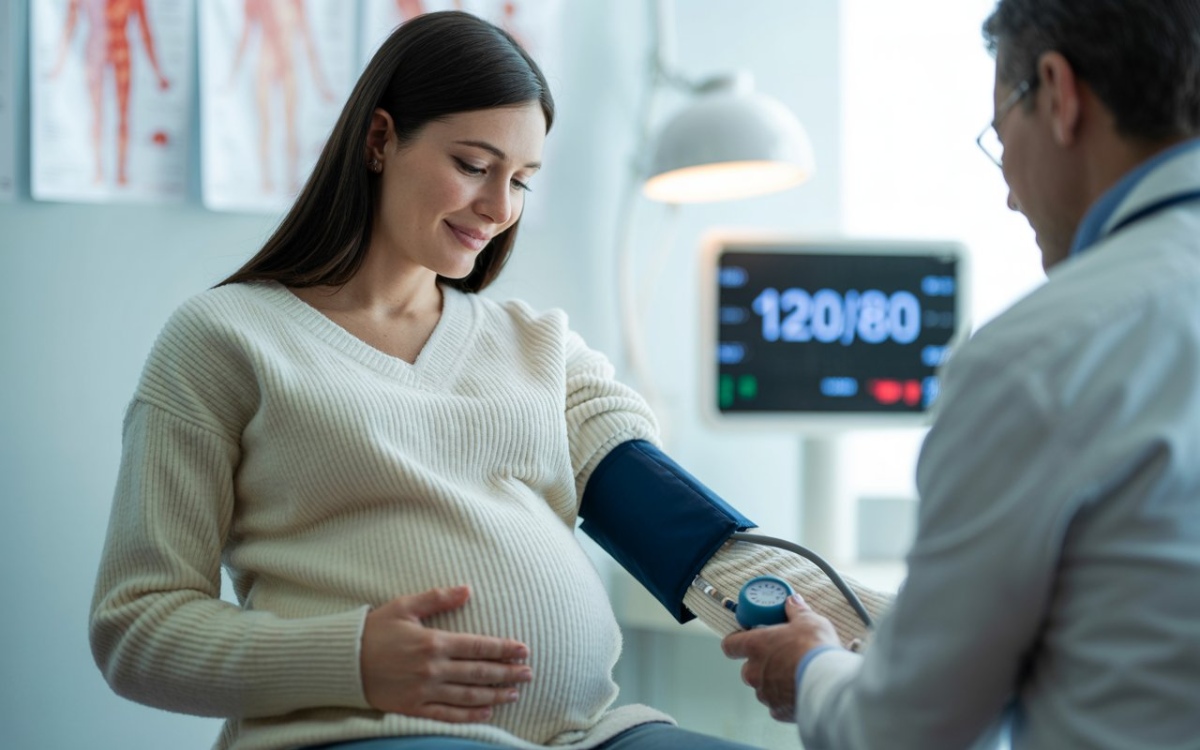
During pregnancy, normal blood pressure is thought to be less than 120/80 mm Hg. High blood pressure, also called hypertension, is diagnosed when readings reach 140/90 mm Hg or higher on two separate occasions after 20 weeks. Both high & low blood pressure during pregnancy can impact not only the mother’s health but also the baby’s well-being, which makes monitoring essential.
Pregnancy is often described as a beautiful journey. But let’s be honest—it can also bring many worries. One of the most common concerns mothers face is changes in blood pressure during pregnancy While some variations are normal, others can be warning signs for your health or your baby’s safety.
I remember one mother sharing how she felt lightheaded every time she stood up during her second trimester. Her doctor reassured her it was just low blood pressure, nothing alarming, but it still made her anxious. On the other hand, another mom explained how she was accepted to the hospital at 32 weeks because of dangerously high blood pressure, and her baby had to be delivered early. These stories remind us why keeping track of blood pressure is so important during pregnancy.
What Counts as Normal Blood Pressure in Pregnancy?
Doctors generally consider anything below 120/80 mmHg normal during pregnancy. Slight dips or rises in the first and second trimesters are common because your body is adjusting to more blood flow and hormonal changes.
- Typical range: 90/60 mmHg to 120/80 mmHg
- Mild changes: Often harmless, especially in early pregnancy
- Too high or too low: Can signal possible complications
Why Blood Pressure Matters for You and Your Baby
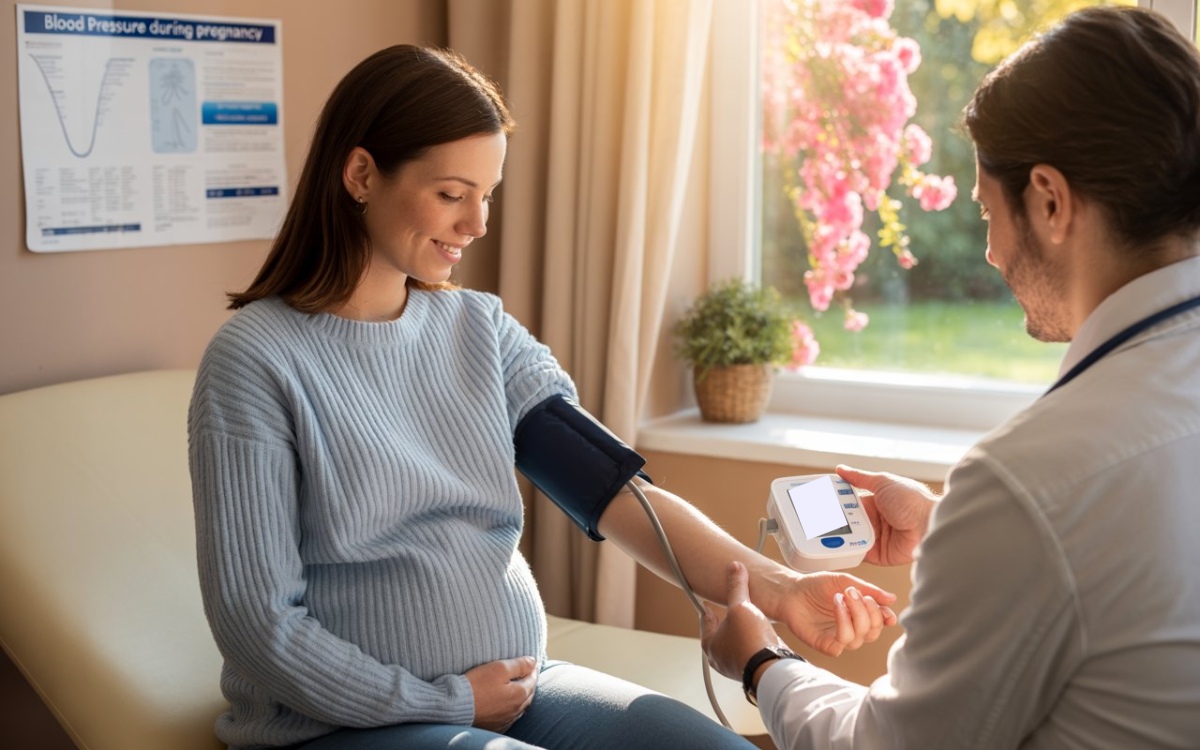
Blood Pressure During Pregnancy is more than just numbers on a monitor. It’s about how well blood—and therefore oxygen and nutrients—reaches the placenta. Stable blood pressure helps your baby grow and thrive. Abnormal readings, however, can mean pregnancy complications like gestational hypertension or preeclampsia.
Types of Blood Pressure During Pregnancy
Low Blood Pressure (Hypotension)
- Causes: Hormonal shifts, dehydration, or lying flat on your back for too long
- Symptoms: Dizziness, fainting, blurred vision, nausea
- What Helps: Drink water, get up slowly, and avoid standing for long periods
Many women feel dizzy during early pregnancy. One mom said she avoided hot showers in the morning because they made her feel like she was about to pass out.
High Blood Pressure (Hypertension)
- Gestational Hypertension: High BP after 20 weeks, no protein in urine
- Chronic Hypertension: Present either before pregnancy or before the 20-week mark.
- Preeclampsia: High BP plus protein in urine, swelling, or headaches (urgent medical care is needed)
A mother with preeclampsia told me her swelling became so severe she couldn’t wear her wedding ring anymore. Her baby was delivered early but is now healthy.
How Blood Pressure Changes Affect the Baby
Risks of High Blood Pressure
Uncontrolled hypertension can limit the baby’s oxygen and nutrient supply. Possible effects include:
- Slow growth (IUGR): The Baby may not gain enough weight in the womb
- Preterm birth: High BP often leads to early delivery
- Low birth weight: Babies born shorter than expected
- Placental abruption: The placenta may separate too soon, a medical emergency
- Stillbirth (rare): Severe, untreated preeclampsia may result in pregnancy loss
Risks of Low Blood Pressure
Low BP is usually less dangerous but still needs attention if persistent. Risks include:
- Reduced placenta blood flow: Less oxygen and nutrition for the baby
- Growth problems: Slower development inside the womb
- Preterm birth: Sometimes needed if oxygen supply is too low
- Baby distress: Fewer movements or signs of low oxygen
Warning Signs You Shouldn’t Ignore
Call your doctor right away if you notice:
- Intense headaches that don’t go away
- Sudden swelling in your face, hands, or feet
- Blurry vision or seeing spots
- Pain under the ribs or upper abdomen
- Shortness of breath
How to Keep Blood Pressure in a Safe Range
Smart Lifestyle Habits
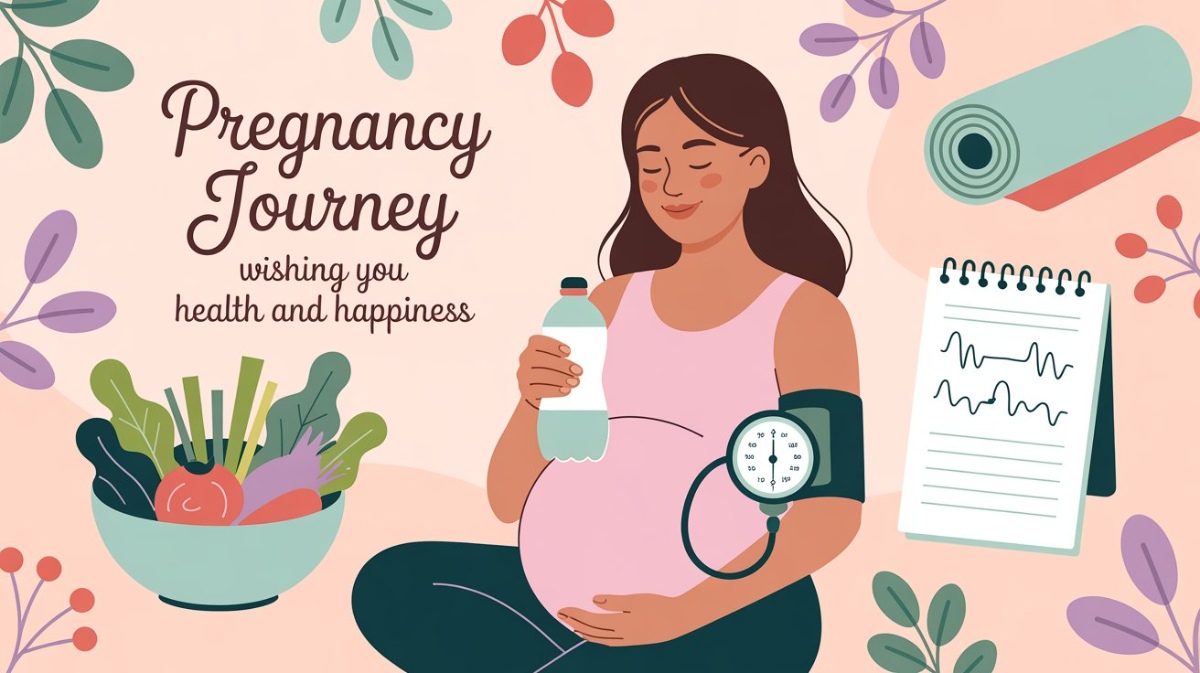
- Eat fresh fruits, vegetables, and whole grains
- Go easy on salty and processed foods
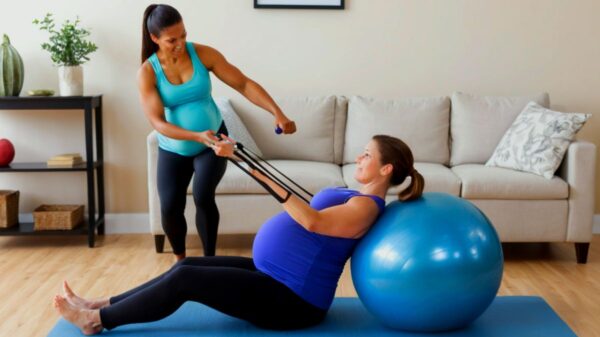
- Stay active with gentle pregnancy-safe exercises like walking or yoga
- Keep hydrated with water throughout the day
Keep Track of Your Readings
- Don’t skip prenatal appointments
- Use a home monitor if recommended
- Keep a small notebook of your daily readings for your doctor
Medical Care When Needed
- Medication may be prescribed if lifestyle changes aren’t enough
- Hospital care is sometimes required for severe cases
Quick Reference Table: Blood Pressure in Pregnancy
| Stage of Pregnancy | Normal Range | Concerning Levels | Possible Condition |
|---|---|---|---|
| First Trimester | 90/60 – 120/80 | Below 90/60 | Low BP (Hypotension) |
| Second Trimester | Slight dip (due to hormones) | Above 140/90 | Gestational Hypertension |
| Third Trimester | 110/70 – 120/80 | 140/90 or higher | Preeclampsia / Hypertension |
When It’s Time to Call Your Doctor
- If your readings stay high or low
- If you notice unusual swelling or vision changes
- If your baby’s movements decrease
Your doctor will decide the best course of action to keep you and your baby safe.
Conclusion
Blood pressure during pregnancy is not something to take lightly. While minor fluctuations are often harmless, both very high and very low readings can affect your baby’s growth and overall pregnancy health. By following healthy habits, attending your checkups, and knowing when to ask for help, you give yourself and your baby the best chance at a smooth journey to birth.
When You Should See a Specialist in the U.S.
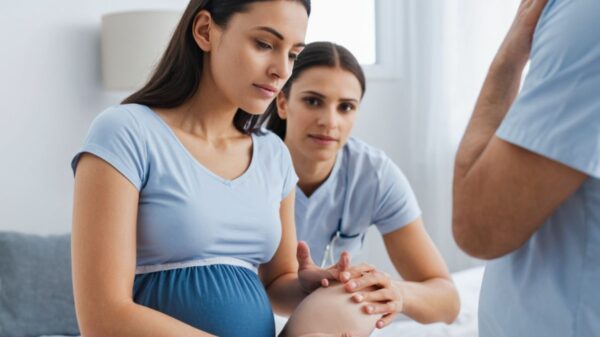
If you feel unusually unwell during pregnancy—such as with dizziness, severe headaches, swelling, or vision changes—seek medical help quickly. The U.S. has many respected obstetrician-gynecologists (OB/GYNs) who focus on women’s health. For example, Dr. Felice Gersh, a board-certified OB/GYN and integrative medicine expert, is known for her compassionate, evidence-based approach to pregnancy & women’s wellness. Consulting with a trusted doctor like her ensures both mother and baby receive the best care.
Frequently Asked Questions (FAQs)
Q1: What is a normal blood pressure in pregnancy?
Usually between 90/60 mmHg and 120/80 mmHg.
Q2: Can low blood pressure hurt my baby?
Mildly low BP is common & usually safe. Severe or ongoing low BP can affect blood flow to the placenta.
Q3: How can I manage high BP naturally?
Eat less salt, stay active, drink water, and manage stress. Always follow your doctor’s advice.
Q4: What’s the difference between gestational hypertension and preeclampsia?
Gestational hypertension is high blood pressure without protein in the urine. Preeclampsia includes protein in urine plus symptoms like swelling and headaches.
Q5: Should I monitor blood pressure at home?
Yes, if your doctor suggests it. It helps spot problems early.
q6: What Happens to Blood Pressure During Pregnancy?
During pregnancy, blood pressure may dip slightly in the first and second trimesters, then return to normal or rise in the third trimester. Significant highs or lows may signal health risks for mom and baby.
Q7: Can blood pressure during pregnancy change from day to day?
Yes. It’s normal for readings to fluctuate slightly, but consistently high or low levels should be checked by your doctor.